Kļūdas kas izraisa ugunsgrēkus.
Mistakes that cause fires.
Praktiski katrs ugunsgrēks ir cilvēka kļūdas, vai bezdarbības rezultāts.
Visbiežāk sastopamie iemesli sadalās aptuveni sekojoši:
Practically every fire is a result of human error or inaction.
The most common causes can be roughly divided as follows:
- Elektrotehniska rakstura iemesli;
- Apkures ierīču un dūmeņu izraisīti ugunsgrēki;
- Neuzmanīga rīcība (Ugunsbīstamie darbi, smēķēšana, u.c.)
- Electrical reasons;
- Fires caused by heating appliances and chimneys;
- Reckless behavior (hot work, smoking, etc.)
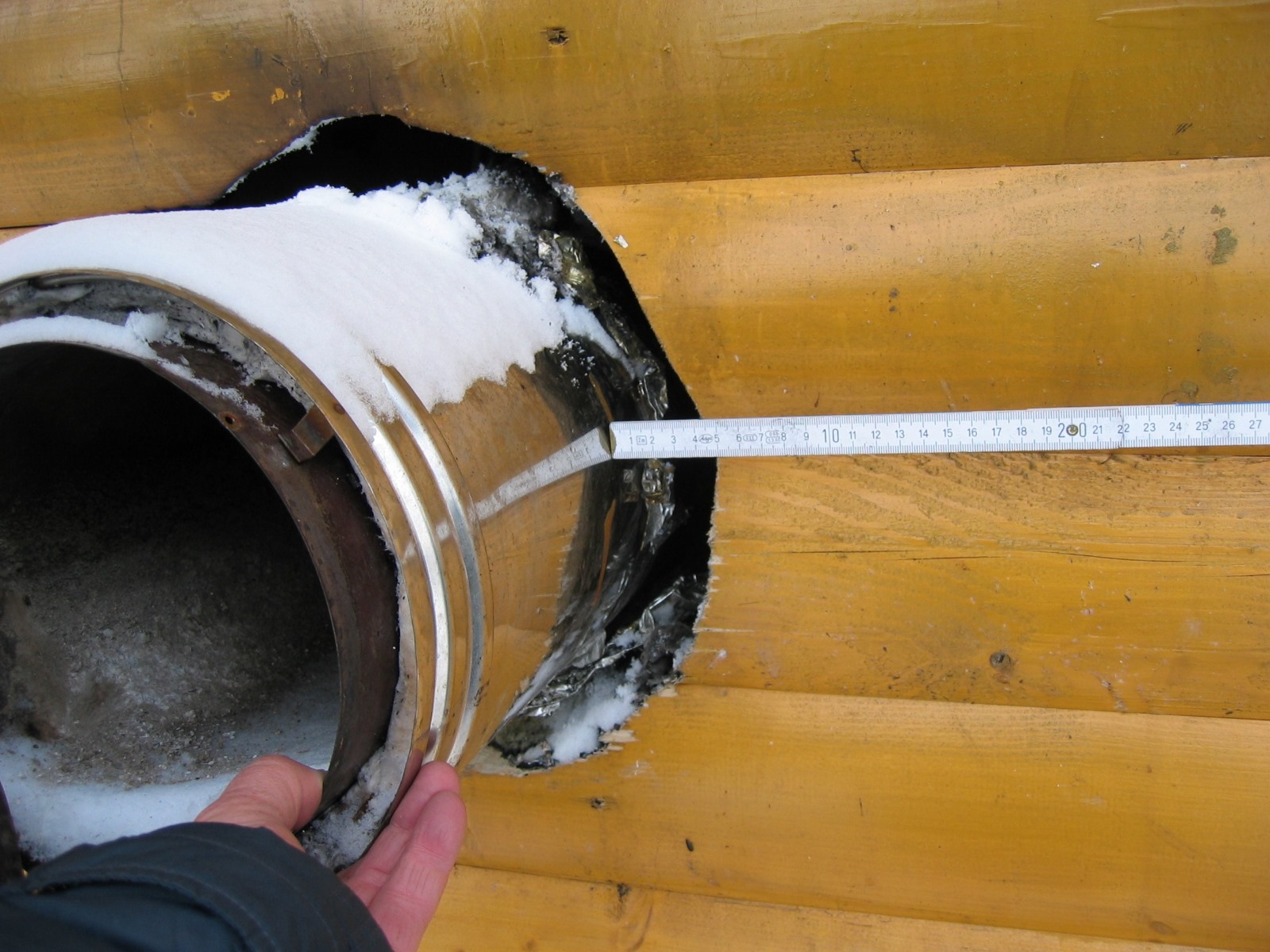
Tipiska kļūda montējot metāla dūmvadus, vietās, kur tie šķērso
sienas, griestu pārsegumus vai jumta plakni.
Lai arī metāla dūmvads ir
viegls, ātri montējams un lēts pret to jāizturas ļoti piesardzīgi un stingri
jāievēro būvnormatīvos noteiktie drošības attālumi (ugunsdrošības atdale).
Metāla dūmvada horizontālā posma izvadīšana caur ārsienu ir jāpārdomā ļoti rūpīgi,
lai nepieļautu aizdegšanos.
Typical mistake when installing metal chimneys is in places where they cross walls,
ceiling coverings, or roof surfaces. Although a metal chimney is lightweight,
quick to install, and inexpensive, it must be handled with great care and strict
compliance with the safety distances specified in building
regulations (fire safety separation).
The routing of the horizontal section of the metal chimney through an
external wall must be carefully considered to prevent ignition.
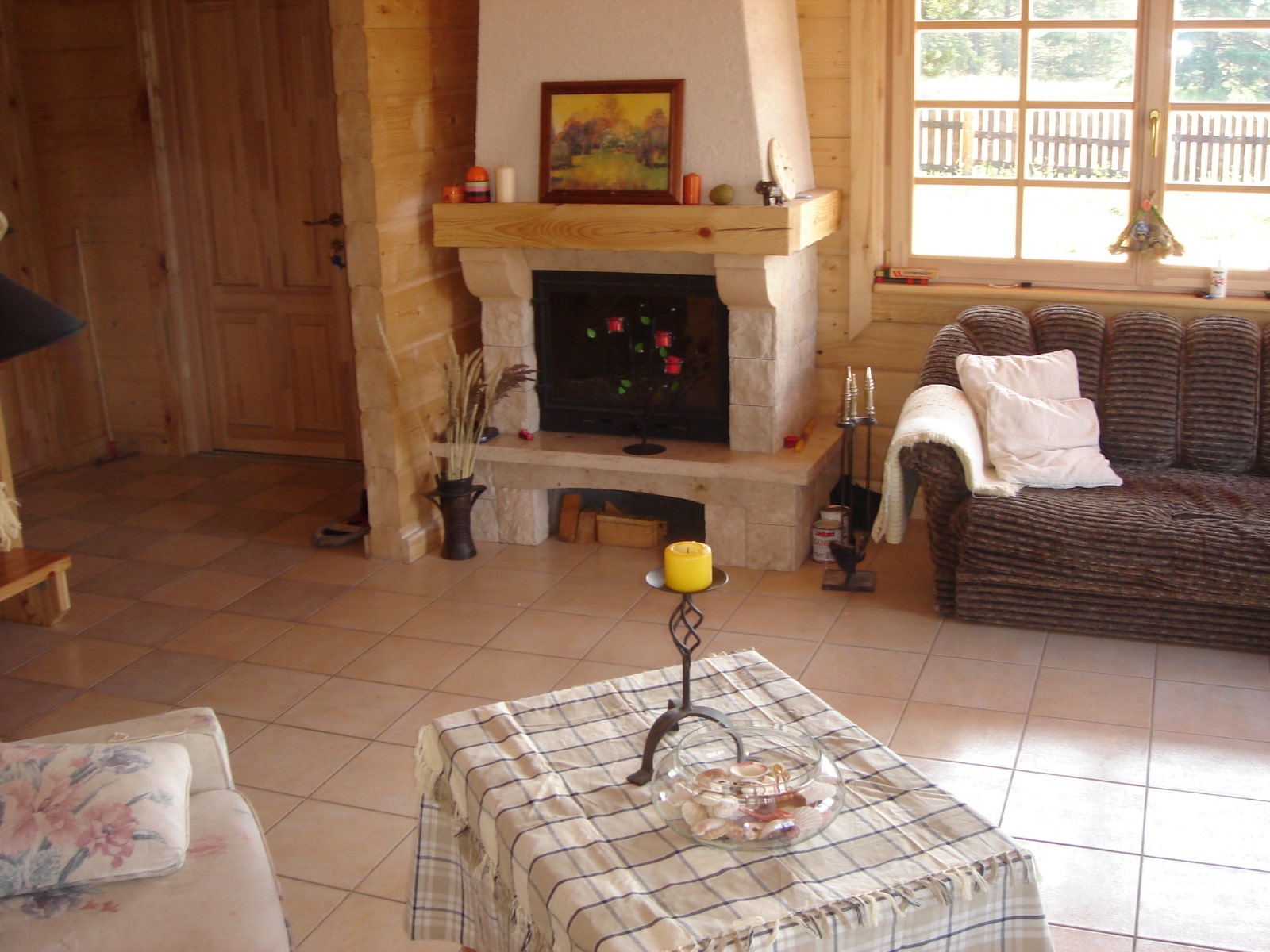
Izbūvējot kamīnu koka konstrukciju mājā nav
ievērots drošības
attālums līdz koka sienai,
tā saucamā ugunsdrošības atkāpe.
Kamīns novietots
tieši pie sienas.
When building a fireplace, the safety distance to the wooden wall is not observed,
this is called the fire safety clearance.
Placing insulation material between the fireplace
and the wooden wall will not
protect against ignition,
if the distance specified in
building regulations is not observed.
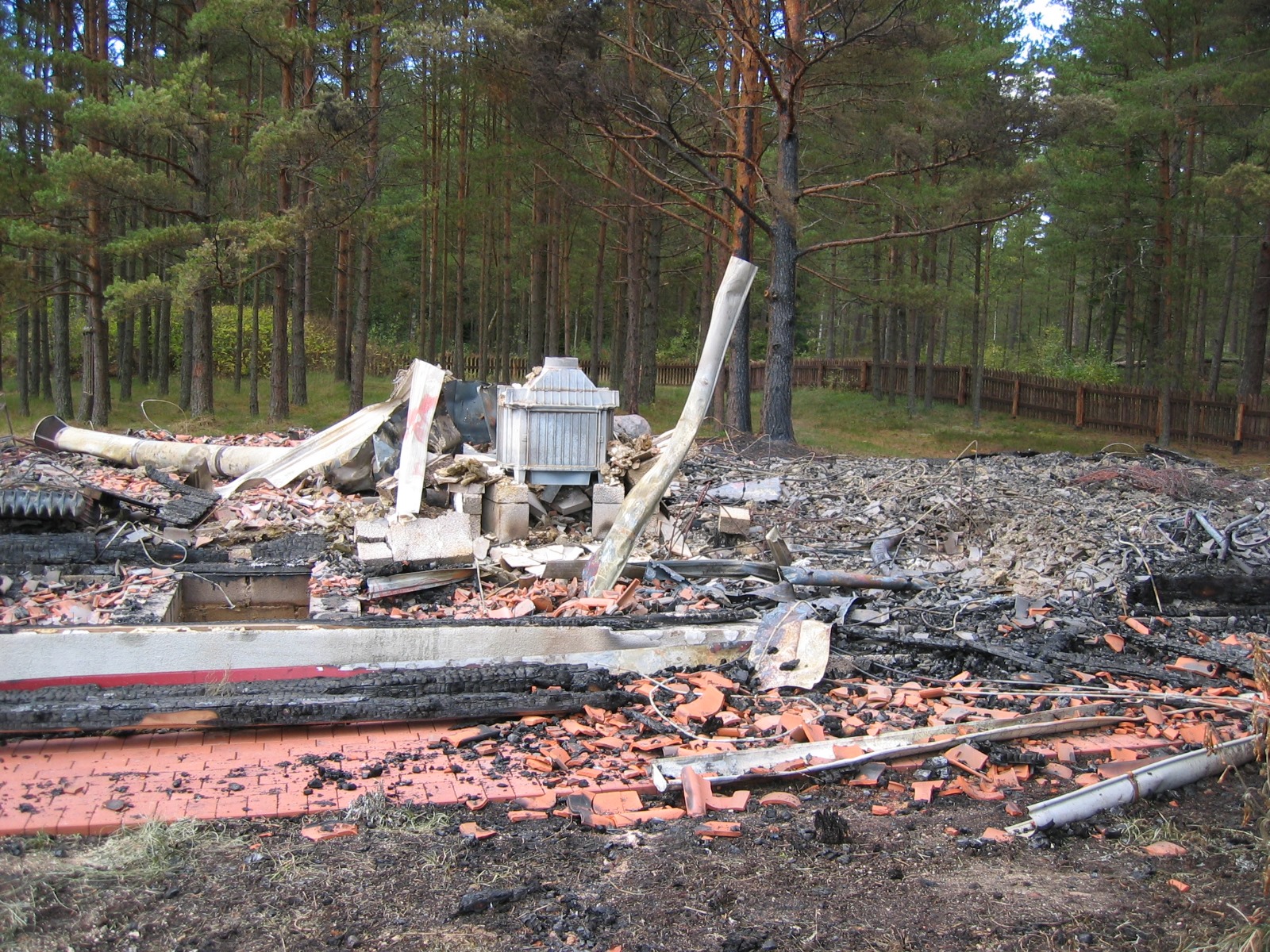
Rezultāts - māja nodega līdz pamatiem.
Izolācijas materiālu ievietošana
starpkamīnu un koka sienu nepasargās no aizdegšanās, ja nebūs ievērots
būvnormatīvos noteiktais drošības attālums.
Result - the house burned down to the foundations.
The installation of insulation materials between the
beams and wooden walls will not protect against ignition
if the safety distance specified in building regulations is not observed.
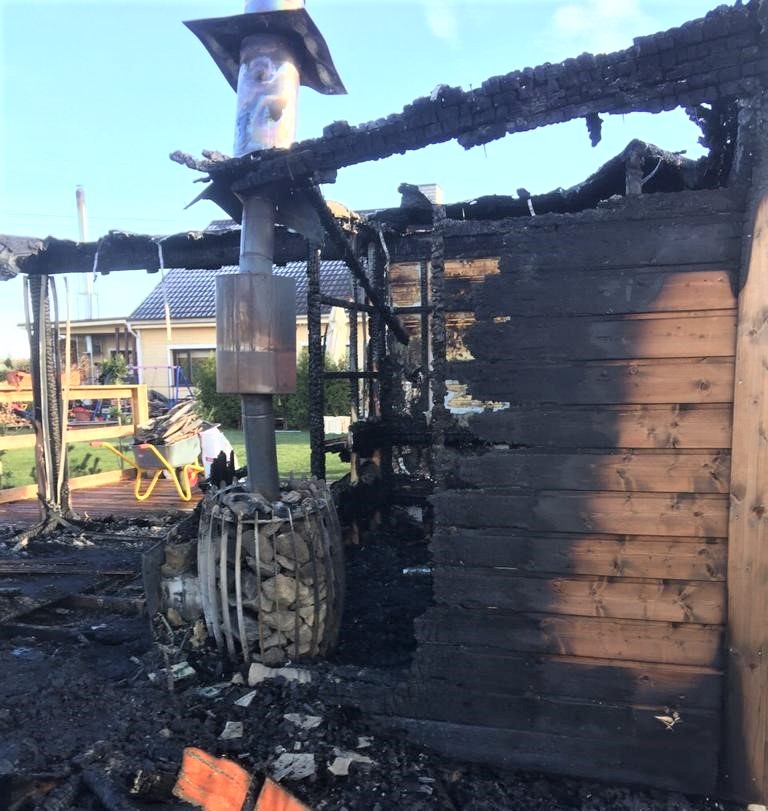
Līdzīga situācija bija arī arpirts krāsni,
kura tika novietota pārāk tuvu koka sienaiēkas stūrī.
A similar situation also occurred with the sauna stove,
which was placed too close to the corner of the wooden wall.
Ugunsgrēki ēkās, kuru iemesli ir bojātas
elektroinstalācijas vai
elektroierīces no statistikas viedokļa ieņem pirmo vietu. Elektroinstalāciju
izbūve
ēkā jāveic ļoti pārdomāti, stingri pieturoties pie
būvnormatīva
prasībām. Nekādā gadījumā
elektrotīkla ekspluatācijas laikā nedrīkst
pielietot
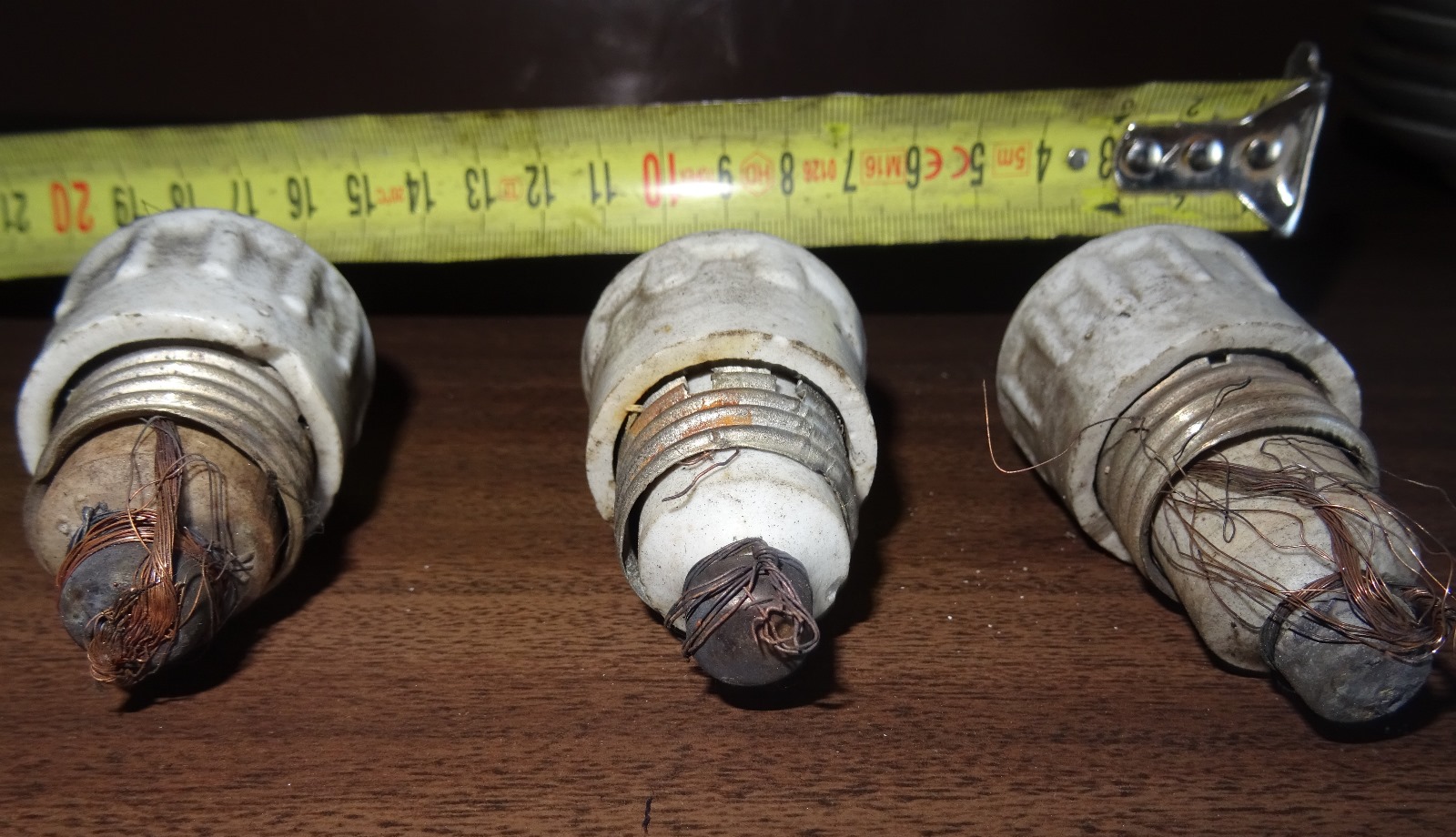
paškalibrētus drošinātājus, to aizliedz Ugunsdrošības
noteikumi.
Jāizvairās no vadu instalāciju vilkšanas caur
asām spraugām, gar karstām
virsmām. Īpaši jāpārdomā
instalāciju vilkšana guļbaļķu mājās, jo tās
pirmajos
ekspluatācijas gados “nosēžas” un var saraut vadu
instalāciju.
Fires in buildings, the reasons for which are damaged electrical installations
or electrical appliances,
statistically hold the first place.
The construction of electrical installations in a building must be done very
thoughtfully, strictly adhering to building code requirements.
Under no circumstances should
self-calibrated fuses be used during the
operation of the electrical network; this is prohibited by Fire Safety regulations.
One should avoid running wiring through sharp gaps or near hot surfaces.
Particularly careful consideration should be given to wiring in log houses,
as they may
settle during their initial years of use, potentially damaging the wiring installation.
Veicot remontus dzīvokļos vai mājās ir jāpārdomā ilgtermiņa
ugunsdrošības risinājumi, kuru mērķis ir nodrošināt drošāku mājokli tā
iemītniekiem.
Ilgtermiņa ideja - izvairīties no viegli degošu vai vispār
degošu materiālu pielietošanas mājoklī, neļaujot aizdegšanās gadījumā
ugunij strauji izplatīties un degšanas procesā izdalīt toksiskus indīgus
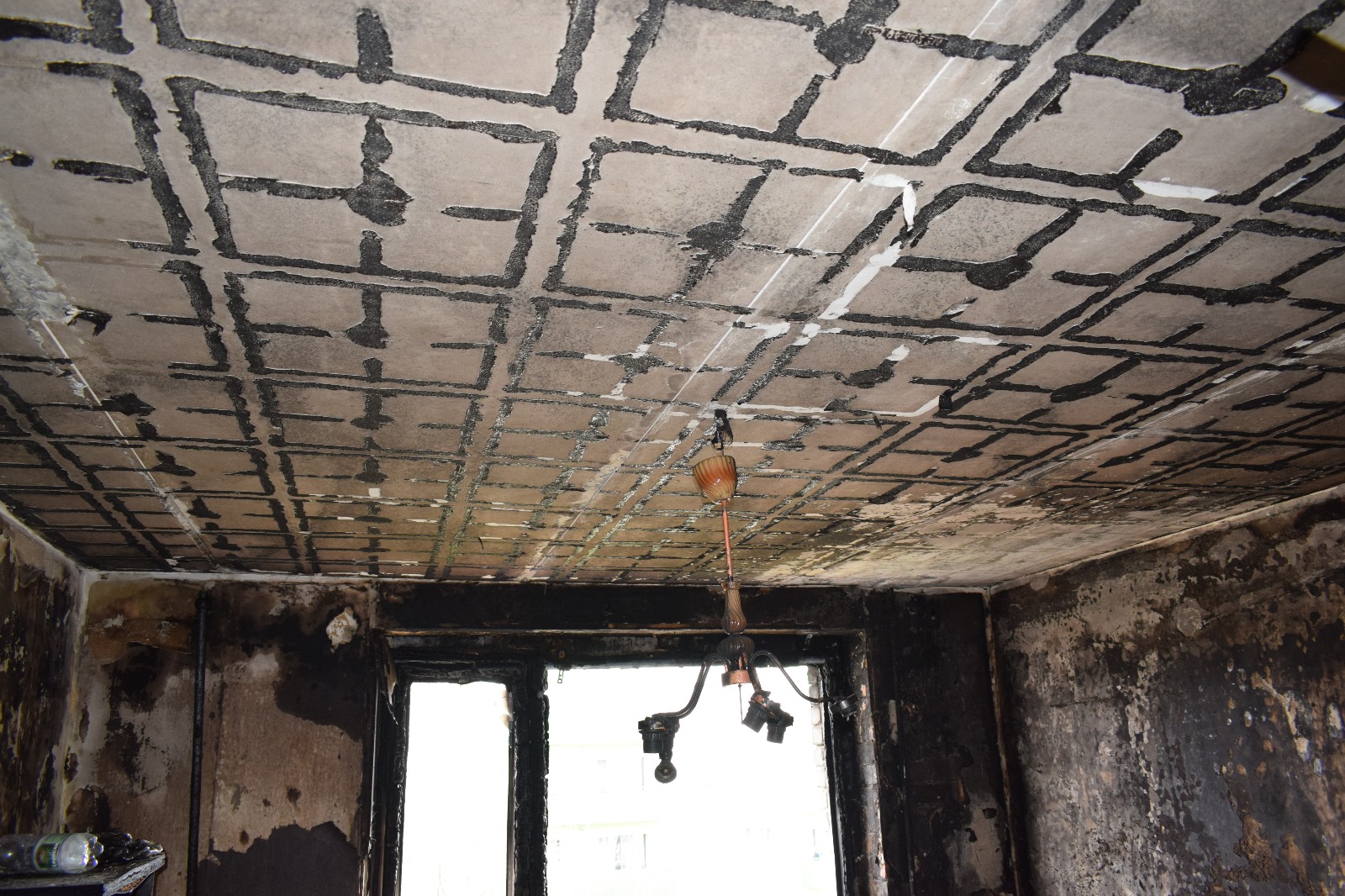
dūmus. Piemērs - attēlā redzami nodeguši griesti, kas
nodega 15 sekunžu
laikā, radot nopietnu
apdraudējumu iemītniekiem.
Šādu griestu apdarei
tagad ir pieejams plašs klāsts no nedegošiem materiāliem.
When carrying out renovations in apartments or houses, long-term fire safety
solutions must be considered,
with the aim of providing a safer living environment
for its occupants. The long-term idea is to avoid the use of easily combustible or
highly flammable materials in the living space, preventing rapid fire spread and the
release of toxic fumes in the event of ignition.
An example is shown in the image with
ceilings that caught fire within 15 seconds, posing a serious threat to the occupants.
A wide range of non-combustible materials is now available for such ceiling finishes.
Apkures ierīces un dūmeņi ir regulāri jātīra un jāveic to tehniskā
apkope un remonts. Šos pasākumus un to periodiskumu nosaka Latvijas
ugunsdrošības noteikumi. Neizpildot Ugunsdrošības noteikumu prasības
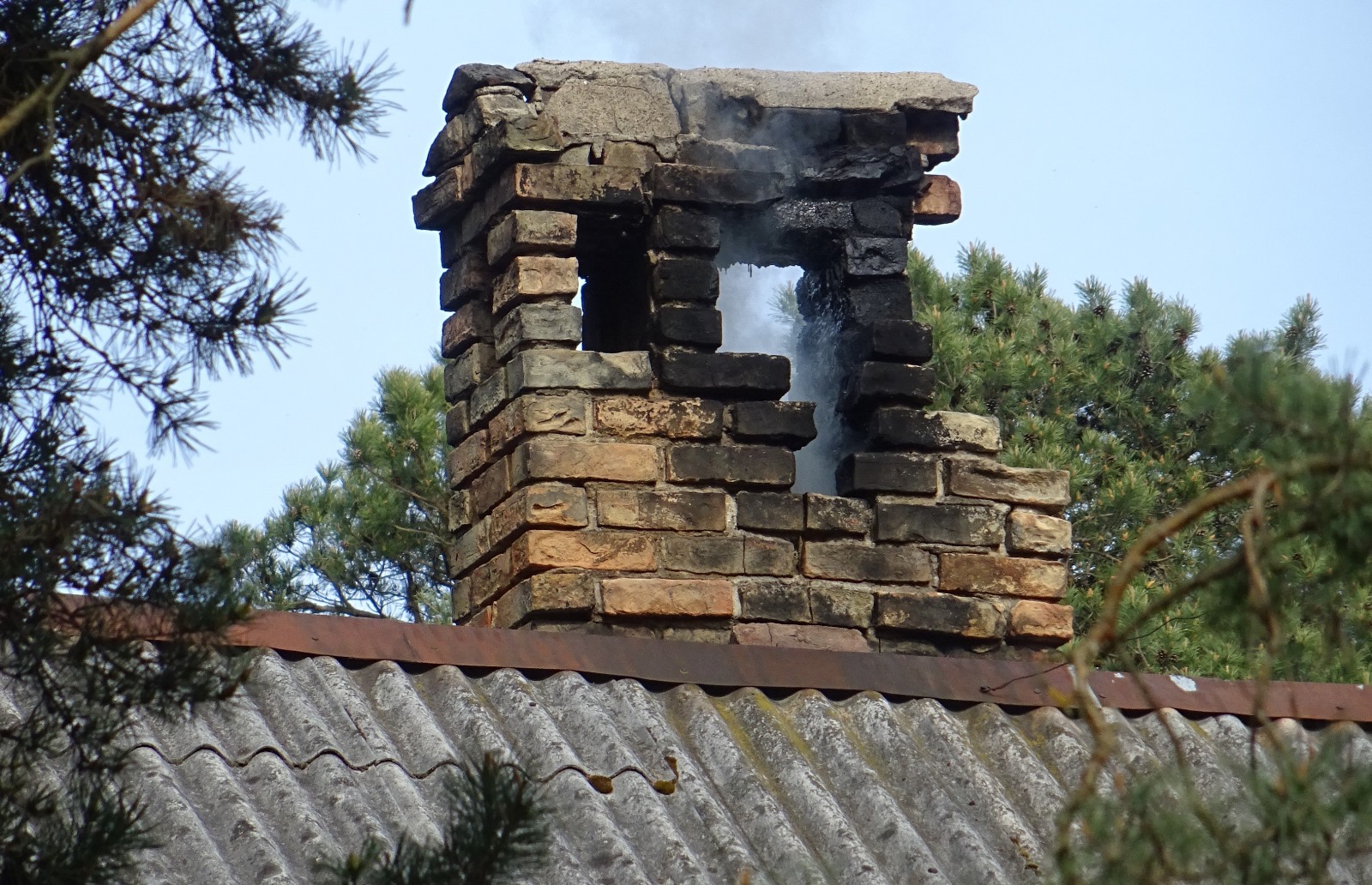
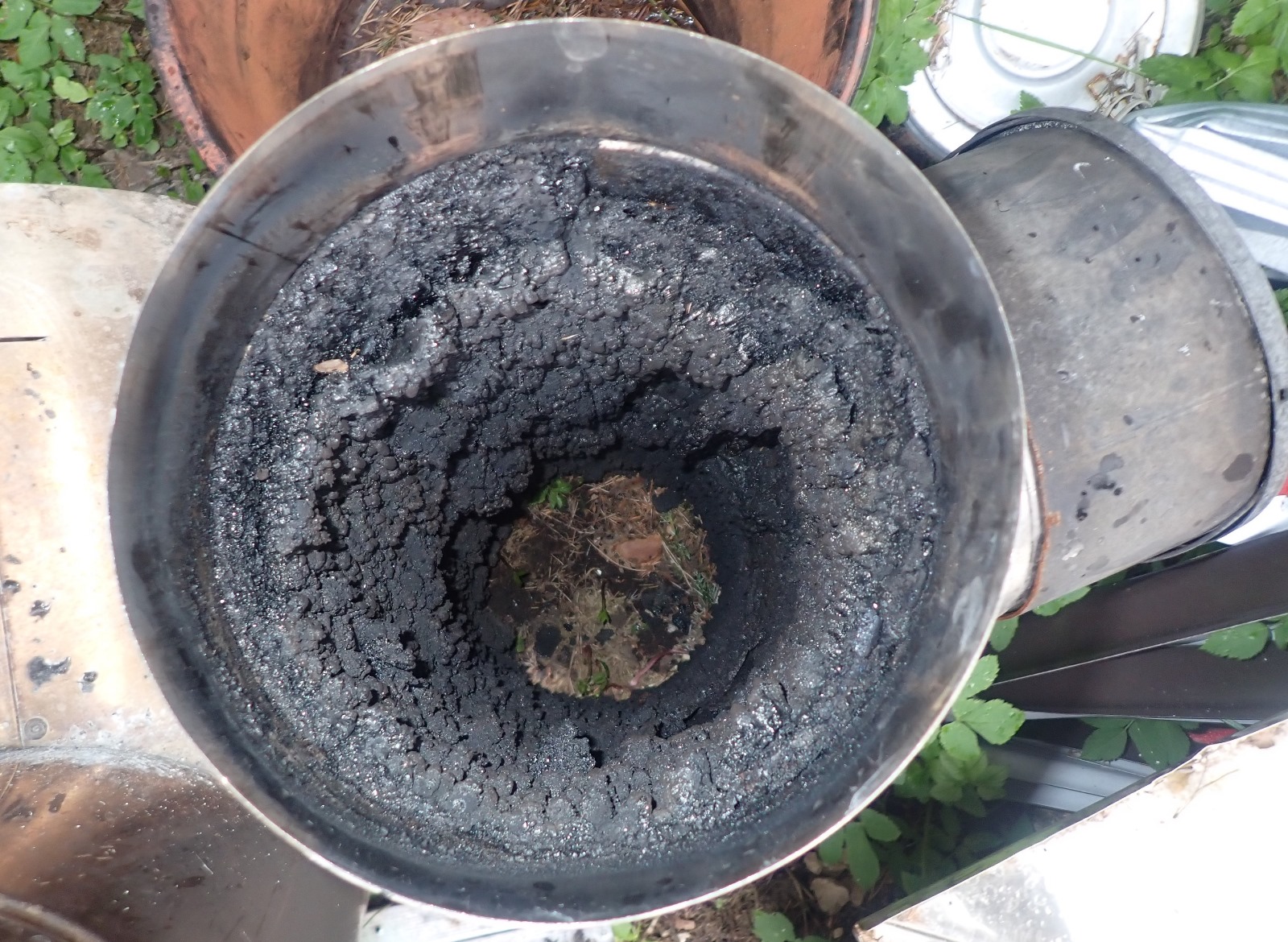
var izcelties ugunsgrēks. Attēlā redzams ar sodrējiem aizaudzis
dūmkanāls. Sodrēji deg ātri un rada augstu temperatūru, līdz pat 1300 C.
Augstā temperatūra un caur dūmkanālu izmestās dzirksteles var
aizdedzināt citas ēkas konstrukcijas.
Bez tīrīšanas ir jāveic regulāra apkures ierīču un dūmvadu tehniskā apsekošana,
kuras laikā atklātie trūkumi ir nekavējoties jānovērš.
Heating appliances and chimneys must be regularly cleaned and undergo
maintenance and repairs as specified by the Latvian fire safety regulations.
Failure to meet these requirements can lead to a fire outbreak.
The image shows a chimney blocked by soot. Soot ignites quickly and generates
high temperatures, up to 1300°C. The elevated temperature and sparks expelled
through the chimney can ignite other building structures. Without proper cleaning,
regular technical inspections of heating appliances and flues must be performed, and any
identified issues must be promptly addressed.
Nedrīkst pieļaut, ka apkures ierīces, arī skursteņi ekspluatācijas laikā nolietojas
tā, ka tajos sāk veidoties plaisas (piemērs attēlā).
Skursteņu tīrīšanas un remontadarbus vislabāk uzticēt sertificētam skursteņslauķim.
Do not allow heating devices, including chimneys, to deteriorate during
operation to the point where cracks begin to form in them (example in the picture).
It is best to entrust chimney cleaning and repair work to a certified chimney sweeper.